15 Best B2B Marketing Automation Tools to Scale Campaigns
Sales teams often struggle with manual lead tracking and unpredictable pipelines, while marketing campaigns fail to deliver consistent results. The gap between generating leads and converting them into revenue continues to widen as businesses rely on spreadsheets and gut feelings rather than systematic processes. B2B marketing automation tools can bridge this divide by streamlining campaigns, nurturing leads at scale, and transforming marketing efforts into predictable revenue growth. The challenge lies in selecting the right platform from dozens of available options.
Evaluating marketing automation platforms requires analyzing CRM integration capabilities, lead scoring features, email workflow automation, and analytics dashboards against specific business requirements. Rather than spending weeks comparing features and pricing models, businesses need efficient ways to identify tools that will deliver measurable pipeline growth. Bud's AI agent simplifies this process by analyzing requirements and surfacing the most suitable automation platforms for each organization.
Table of Contents
-
Why B2B Marketing Teams Struggle to Turn Automation Into Revenue
-
What Needs to Change in B2B Marketing Automation Before Tools Actually Work
-
15 Best B2B Marketing Automation Tools for Building a Revenue-Driven System
-
How to Turn Your Marketing Automation Stack Into a Revenue Engine
-
The Same Problem in Marketing Automation Is Manual Work Across Disconnected Systems
Summary
-
B2B companies miss 70% of their revenue targets despite having marketing technology in place, according to Forbes research. The gap isn't tool capability. It's integration and attribution. Marketing automation platforms, CRMs, and advertising tools each optimize for their own metrics without connecting to broader revenue outcomes. When a deal closes six months after first contact, teams can't definitively trace which touchpoints mattered or where the budget should shift next quarter.
-
Lead scoring models often optimize for engagement activity rather than buying intent, surfacing prospects who consume content but never enter a serious evaluation stage. Demand Science research shows 70% of B2B marketers report strong campaign performance metrics, yet many struggle to demonstrate clear revenue impact. The disconnect happens when teams measure email open rates and content downloads without connecting those activities to closed deals. Automation runs perfectly, executing workflows exactly as designed, but no one has verified that the workflows themselves drive revenue outcomes rather than just activity metrics.
-
Unified data across channels requires every customer interaction to update a single source of truth that every system references. When a prospect downloads a whitepaper, attends a webinar, and replies to a sales email, those signals should aggregate into a coherent view of buying intent, not three separate activity logs that never connect. Without that integration, attribution models guess at causation instead of measuring it. Closed-loop attribution must trace each closed deal back through every meaningful touchpoint and measure the incremental value each one added.
-
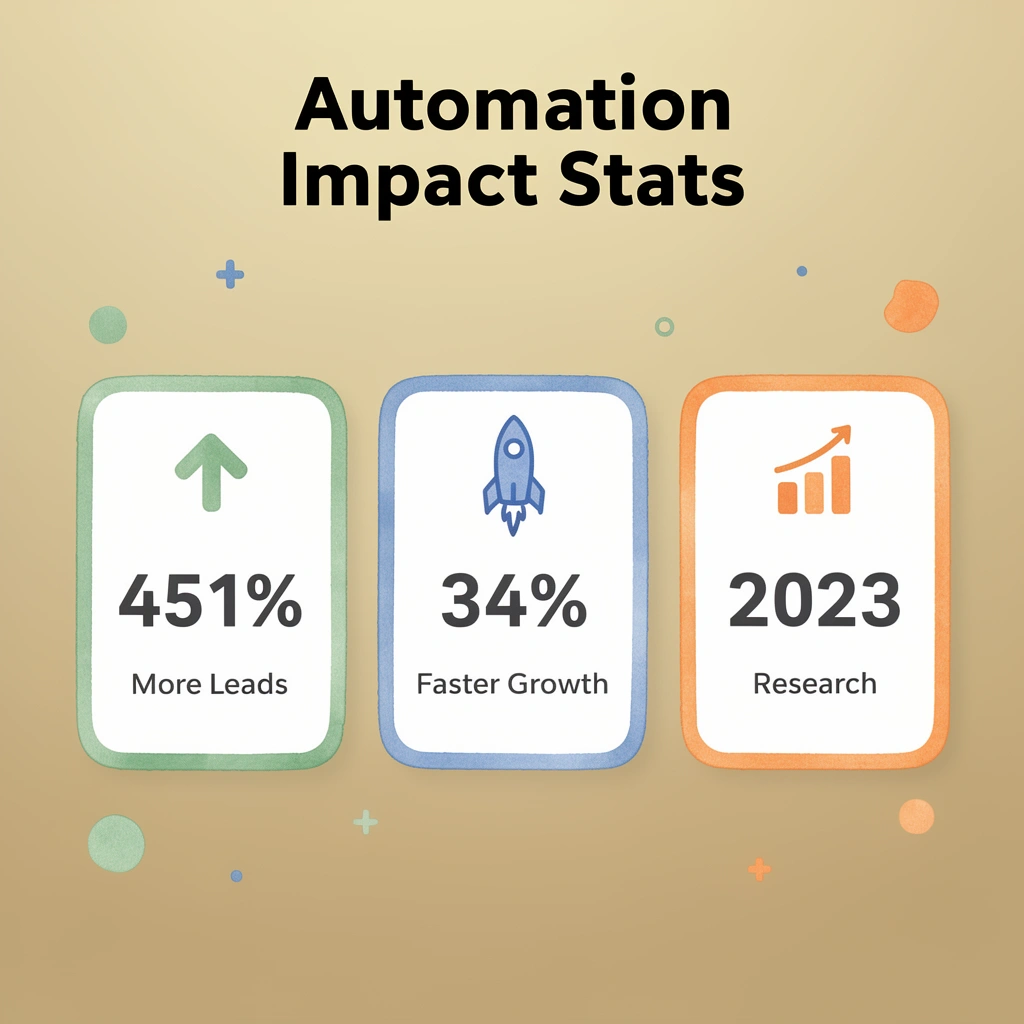
Marketing automation can increase qualified leads by 451% according to industry research, but only when systems capture and act on buying signals across the entire journey. Most teams audit their tools by reviewing the last five closed deals and mapping every touchpoint from first contact to signature. The gaps reveal where someone manually copied data between systems or where prospects went silent because no one knew they'd engaged. Revenue attribution breaks when email platforms, CRMs, and ad platforms each claim credit for conversions without sharing a unified view.
-
Companies with aligned sales and marketing teams see 36% higher customer retention rates, according to RevOps Co-op research, and that alignment starts with shared metrics. Tracking lead volume matters less than tracking how many leads came from sources that have historically converted at over 15%. When both teams optimize for pipeline velocity rather than departmental vanity metrics, the entire system works toward the same outcome rather than celebrating activity that doesn't lead to closed deals.
-
Bud's AI agent addresses this by autonomously executing multi-step workflows across disconnected systems, handling the manual coordination among marketing ops, sales ops, and RevOps teams that prevents most automation from connecting activity to revenue outcomes.
Why B2B Marketing Teams Struggle to Turn Automation Into Revenue
Your marketing team has automation tools: CRM syncs with email, lead scoring runs automatically, and workflows trigger on behavior. Yet when asked which campaigns drove closed deals last quarter, the answer becomes murky.

Key Point: Having automation tools doesn't automatically translate to revenue visibility—most teams can track activities but struggle to connect them to actual sales outcomes.

Warning: The gap between automation capability and revenue attribution is where most B2B teams lose millions in potential optimization opportunities.
What's the real problem with marketing automation implementation?
The problem isn't access to technology; it's that most implementations automate activity without connecting it to revenue outcomes. According to Forbes, 70% of B2B companies miss their revenue targets despite having marketing technology in place.
The gap isn't capability—it's integration and attribution. Your tools capture data, send emails, and score leads separately, but they don't answer what your CEO cares about: what's working and how do we know?
What causes workflow disconnection in marketing teams?
Your marketing automation platform, CRM, and advertising platforms each optimize their own metrics without connecting to revenue outcomes. When a deal closes six months after the first website visit, you cannot determine which touchpoints mattered most or how to allocate budget next quarter.
Why do integration promises lead to data silos instead?
Teams collect tools that promise to work together but end up creating data silos instead. You're paying for five different services that capture leads, score engagement, and trigger follow-ups, yet none provide actionable pipeline insights. The result: dashboards filled with metrics that don't connect to the numbers your executive team uses to evaluate marketing performance.
What happens when lead generation lacks revenue context?
Automation excels at generating leads: forms get filled out, content gets downloaded, and webinar sign-ups flow into your CRM. But volume doesn't ensure quality when your sales team can't distinguish between curious prospects and decision-makers with a budget. Many teams discover their lead scoring models reward engagement activity instead of buying intent, surfacing prospects who consume your content but never seriously consider purchasing.
Why does attribution fall apart in automated systems?
Attribution falls apart because most automation platforms track first-touch or last-touch attribution, ignoring the 15 other interactions that influenced the deal. A prospect might attend three webinars, download two case studies, and engage with four email sequences before requesting a demo. Your automation tool credits the demo request; your sales team credits the cold call from two weeks earlier. Nobody knows what prompted the prospect to move from awareness to consideration.
When activity metrics replace revenue signals
Research from Demand Science shows that 70% of B2B marketers report strong campaign performance metrics, yet struggle to demonstrate clear revenue impact. Teams measure email open rates, click-through percentages, and content downloads without connecting those activities to closed deals. Executives need proof that marketing spending generates pipeline, not impressions.
Your reports show increasing engagement and growing lead volume, but your sales team complains that marketing-qualified leads rarely convert. The automation executes workflows perfectly, yet no one has verified that the workflows drive revenue outcomes rather than activity metrics.
Why do teams spend more time managing tools than analyzing results?
Traditional marketing automation requires constant setup, monitoring, and adjustment. Teams build workflows, set scoring thresholds, define segmentation rules, and map integration points. When performance shifts or new channels emerge, someone must reconfigure the automation logic. Most teams spend more time managing their tools than analyzing whether automation improves pipeline velocity or deal size.
How does outcome delegation change the dynamics of automation?
The shift from tool setup to outcome delegation changes this dynamic. Instead of building complex workflows and hoping they drive revenue, teams focus on the business outcome first. Platforms like Bud's AI agent operate as autonomous team members rather than as software that requires setup. Our AI agent lets you assign the task, define the revenue goal, and handle execution end-to-end, adjusting tactics based on what moves prospects through the pipeline.
But knowing the tools aren't the problem only matters if you know what needs to change.
What Needs to Change in B2B Marketing Automation Before Tools Actually Work
The real shift isn't finding better tools—it's understanding that tools don't create systems, and systems generate revenue. Most teams confuse what a platform can do with strategic architecture, assuming software features solve fundamental problems.

Key Point: The biggest mistake in B2B marketing automation is treating technology as a substitute for strategy rather than a strategy enabler.
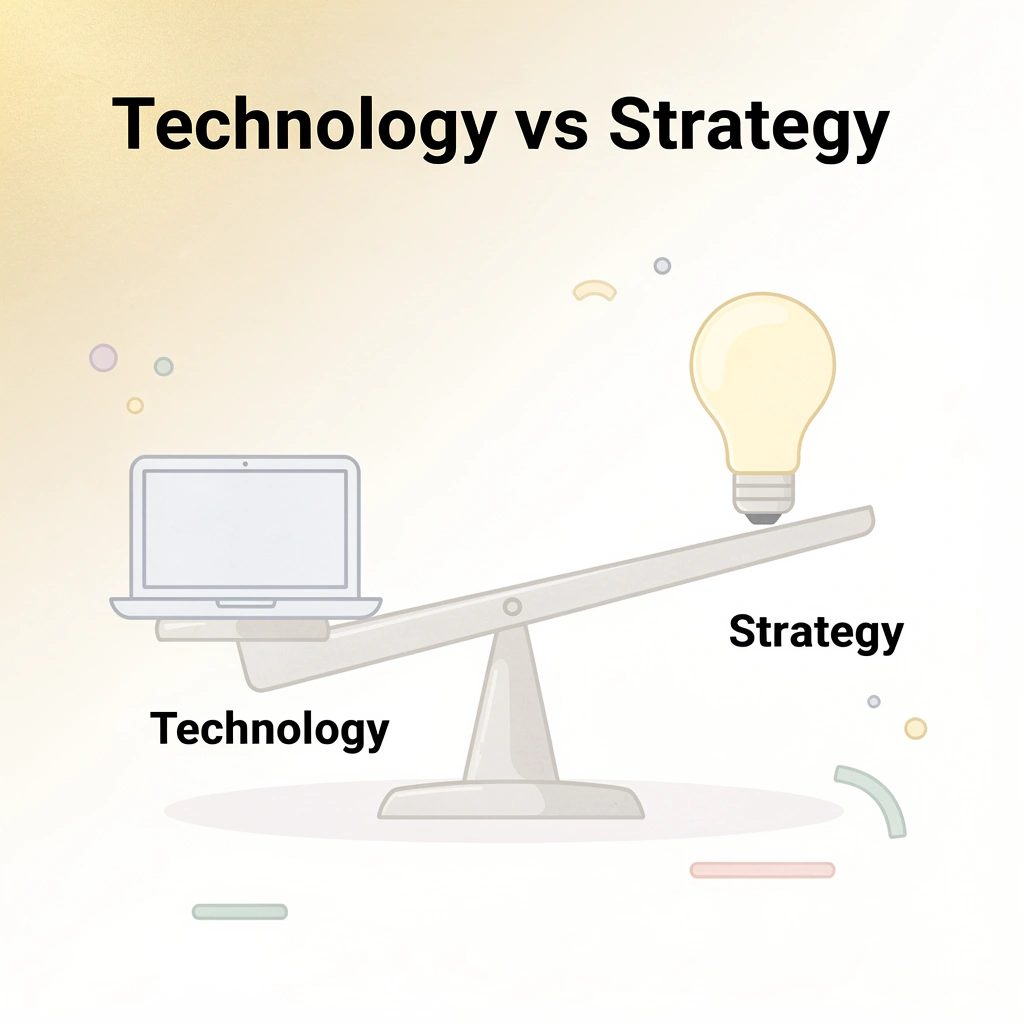
Warning: Before investing in any marketing automation platform, audit your current processes and ensure you have clear workflows that can be systematically automated—otherwise you're just digitizing chaos.
Why doesn't adding more tools solve automation problems?
Adding another platform to your stack feels productive. But many marketing teams use only a small portion of the features they already pay for. The problem isn't access to features; it's the lack of planning for how these tools should work together to move a prospect from awareness to purchase.
What happens when marketing tools don't communicate?
When your email platform doesn't talk to your CRM, and your CRM doesn't share attribution data with your ad platform, you're automating disconnected tasks. Each tool optimizes its own metrics (open rates, lead scores, click-throughs) without considering whether those activities drive pipeline velocity or deal value. The system never closes the loop because there is no loop—only parallel tracks that occasionally intersect.
What "good" actually looks like
Unified data across channels means every customer interaction updates a single source of truth that all systems reference. When a prospect downloads a whitepaper, attends a webinar, and replies to a sales email, those signals should converge into a clear view of buying intent, not three separate activity logs. Without that integration, your attribution models guess at causation instead of measuring it.
How does lifecycle-based automation replace traditional campaigns?
Lifecycle-based automation replaces campaign thinking with journey architecture. Instead of launching a nurture sequence that runs identically for every contact, the system adapts based on each prospect's position in their buying process. Early-stage contacts receive educational content; late-stage contacts receive case studies and ROI calculators. The automation responds to behavior, not calendar dates.
What makes closed-loop attribution different from basic tracking?
Closed-loop attribution connects marketing activity to revenue outcomes by tracking which touchpoints influenced deals that closed. According to a 2025 research surveying 500+ B2B leaders, most systems cannot prove which interactions mattered. When you trace a closed deal back through every meaningful touchpoint and measure the incremental value each one added, budget allocation becomes data-driven rather than political.
Platforms like Bud's AI agent shift from configuring workflows to delegating outcomes. Our AI agent lets you define the revenue goal, and the system executes independently, adjusting tactics based on what converts prospects. It operates less like software that requires constant tuning and more like a team member with its own infrastructure, acting autonomously.
Why do tools amplify existing problems instead of solving them?
Even the best tools strengthen the system they're part of. If your system values activity over results, automation will create more activity. If your data is siloed, new platforms will create new silos. If your attribution model can't link touchpoints to revenue, adding another channel adds another blind spot. The tools aren't the problem. The real problem is failing to think about how the whole system works together.
What does fixing the system actually require?
Fixing the system means rethinking how marketing, sales, and revenue operations work together, how information moves between teams, and whether the metrics everyone tracks predict revenue or measure activity. This requires organizational change, not a software upgrade.
The question isn't which tools to buy next, but whether your system is designed to turn those tools into a revenue engine or simply a more complicated way to stay busy.
15 Best B2B Marketing Automation Tools for Building a Revenue-Driven System
The best B2B marketing automation tools strengthen specific parts of your revenue system: visitor identification, intent detection, sales-marketing handoff, or execution workflows. Each tool below explains what problem it solves and what breaks without it.

Key Point: The most effective marketing automation isn't about having every feature—it's about choosing tools that strengthen your weakest revenue links and create measurable pipeline growth.
Warning: Many businesses fail with automation because they focus on features instead of revenue outcomes. The wrong tool can actually slow down your sales cycle and create data silos between teams.
| Automation Focus | Revenue Impact | Best For |
|---|---|---|
| Lead Scoring | Faster qualification | High-volume pipelines |
| Intent Detection | Earlier engagement | Enterprise sales |
| Workflow Automation | Reduced manual tasks | Growing teams |
| Attribution Tracking | Better ROI visibility | Multi-channel campaigns |

1. Bud
Most teams switch between tabs, copying data from one platform to another and manually starting workflows that should run automatically. As your stack grows, these workarounds fail: context gets lost between systems, tasks fall through cracks, and coordinating across five different tools turns a 10-minute task into an hour.
Bud provides an AI agent with its own computer, browser, and infrastructure to execute multi-step workflows independently. The agent navigates websites, fills forms, pulls data, and completes tasks like a human team member, accessible via text or Telegram. Teams compress what previously required 20-tab workflows into simple delegated instructions.
Best for
Teams managing repetitive tasks across multiple platforms who need an AI worker, not another tool to configure.
What sets it apart
Full computer access means Bud handles workflows other automation platforms can't touch: Bloomberg Terminal analysis, GitHub tickets, and QA testing across live sites. The AI agent executes work independently rather than simply connecting APIs.
Limitations
Not designed for enterprise marketing ops teams running complex multi-business-unit campaigns.
Verdict
The future of automation is delegating tasks to an AI entity that determines how to complete the work.
2. MarketBetter
Best for
B2B sales teams need marketing automation and sales execution in one platform.
MarketBetter bridges the gap between marketing signals and SDR action. The Daily SDR Playbook converts intent signals into prioritized action items. Website visitor identification reveals which companies are browsing in real-time. AI-powered email sequences deliver hyper-personalized outreach based on prospect behavior. Smart Dialer enables warm outbound calling. AI Chatbot engages visitors and routes qualified conversations to the appropriate rep.
How does MarketBetter eliminate daily workflow confusion?
The Daily Playbook tells each SDR exactly who to contact, what channel to use, and what to say, eliminating the need to juggle multiple tabs and figure out priorities each morning.
What sets it apart
Most platforms create a handoff problem between marketing and sales. MarketBetter eliminates it by converting signals into executable workflows.
Pricing
Standard at $99/user/month includes all products (Daily SDR Playbook, Website Visitor ID, AI Chatbot, Email Automation, Smart Dialer add-on), 5M AI credits, and 500 enrichment credits per seat. Enterprise offers custom integrations and volume discounts.
Limitations
Not designed for enterprise marketing operations with complex multi-business unit campaigns or marketing-led nurture.
Verdict
If your SDRs spend the first hour of every day figuring out who to call, this is a strong fit.
3. HubSpot Marketing Hub
Best for
Small to mid-size businesses and mid-market companies seeking integrated CRM and marketing tools.
HubSpot remains the default choice for companies with fewer than 200 employees. Its marketing automation is solid: workflows, lead scoring, email sequences, landing pages, and reporting integrate seamlessly.
What makes HubSpot's marketing automation effective?
The workflow builder with branching logic enables the creation of campaigns. Native CRM integration eliminates sync problems. Content management and SEO tools are included, along with comprehensive onboarding and learning resources.
What's not
Pricing escalates rapidly. Professional starts at $800 a month, but contact-based pricing means you'll pay $3,000 or more per month for 10,000 contacts.
Limited visitor identification
HubSpot identifies form-fillers and tracked contacts, but cannot reveal anonymous companies the way dedicated visitor ID tools can. The sales-marketing handoff remains manual, with lead scoring triggering a lifecycle stage change before sales must determine next steps.
Pricing
Free tools are available. Professional costs $800 per month, and Enterprise costs $3,600 per month. Costs increase with additional contacts.
Verdict
This is a great all-in-one tool for growing companies, though it becomes expensive and limited at scale.
4. Adobe Marketo Engage
Best for
Enterprise marketing operations teams are running complex campaigns across regions and business units.
Marketo is powerful but expensive and requires skilled operators. It delivers sophisticated lead scoring with behavioral and demographic models, revenue attribution, multi-touch reporting, advanced segmentation, dynamic content, and a robust API ecosystem. It suits dedicated marketing ops teams running multi-touch, multi-channel campaigns across global business units.
What are the drawbacks and costs?
Learning to use Marketo requires significant time and typically a certified professional. The basic version costs $895 or more per month, with larger company deals custom-priced at typically $50K-$150K/yr. The interface appears dated despite Adobe's acquisition. Marketo identifies signals but doesn't drive sales; it reports what occurred rather than directing next steps.
Verdict
It's the standard choice for large companies for a reason, but it's excessive for teams with fewer than 50 people.
5. Salesforce Marketing Cloud Account Engagement (Pardot)
Best for
Companies already deep in the Salesforce ecosystem.
If your CRM is Salesforce and you're not switching, Pardot (now rebranded as Marketing Cloud Account Engagement) is the easiest choice. Native integration ensures lead data flows smoothly between marketing campaigns and sales pipeline without middleware or sync delays.
What features does Pardot offer for B2B marketing?
Features include Einstein AI for lead scoring and send-time optimization, B2B marketing analytics with pipeline attribution, and Engagement Studio for visual campaign building.
Expensive
Growth tier at $1,250/mo, Plus at $2,500/mo, and Advanced at $4,000/mo. Requires Salesforce; this is not standalone software.
Innovation is slow
Salesforce's B2B marketing updates lag behind the core CRM. Visitor tracking is basic, cookie-based, and works only for known contacts.
Verdict
The safe enterprise choice if you're already on Salesforce. Not where innovation happens.
6. 6sense
Best for
Enterprise ABM teams with a budget for intent data.
6sense's Revenue AI platform identifies in-market accounts using intent data from across the web, detecting research activity before prospects visit your site.
What are 6sense's key features and capabilities?
Key features include industry-leading intent data (through the Bombora partnership and proprietary signals), account identification, buying-stage prediction, cross-channel orchestration across ads, email, and sales, and predictive analytics for pipeline forecasting.
What are the limitations and pricing considerations?
Pricing starts at $60K–$120K per year, making it unsuitable for startups or small businesses. The platform identifies accounts seeking to buy, but doesn't guide individual sales development reps on daily actions.
It takes 2-3 months before you see results after setup. Intent data is based on probability, so some teams report false signals mixed with real ones.
Verdict
6sense is powerful if you have the budget and a team that can act on the data, but it's an intelligence layer, not an execution layer.
7. Demandbase
Best for
Companies focused on account-based marketing that run account-based advertising alongside outbound sales efforts.
Demandbase One combines account identification, intent data, and B2B advertising into one platform (merging Engagio, InsideView, and DemandMatrix). Features include account-based advertising at scale across display, LinkedIn, and connected TV; technographic and intent data; journey analytics to track account progression through the sales process; and sales intelligence tools for sales reps.
What are the pricing and limitations?
Custom pricing typically ranges from $48K–$150K+/year, depending on the modules you choose. The platform's complexity, combining multiple products, requires significant setup time. Its advertising focus limits usefulness for teams without paid campaign budgets, and sales execution capabilities are constrained.
Verdict
The ABM leader for enterprise teams running multi-channel campaigns with advertising budgets. Overkill for SDR-led motions.
8. ActiveCampaign
Best for
Small and medium-sized businesses seeking solid email automation without enterprise pricing.
ActiveCampaign offers a powerful visual automation builder with 900+ integrations, predictive sending, content optimization, and event-based triggers. The basic CRM covers essentials but lacks Salesforce-level pipeline management, visitor identification, and B2B features such as ABM or intent data.
Contact-based pricing means costs increase as your list grows, and the platform does not scale well with expanding sales teams.
Pricing
Lite from $49/mo, Plus from $49/mo (with CRM), Professional from $149/mo.
Verdict
Best value for small teams focused on email automation; companies with rapid growth will outgrow it quickly.
9. Brevo (formerly Sendinblue)
Best for
Startups and small businesses are seeking affordable marketing across multiple channels.
Brevo offers email, SMS, WhatsApp, and chat marketing at startup-friendly prices. The free version lets you send 300 emails per day across multiple channels (email, SMS, WhatsApp, and push notifications), plus transaction email infrastructure and basic automation workflows.
What are Brevo's limitations for B2B sales?
Not built for B2B. It lacks lead scoring, account-level tracking, and sales execution features such as a dialer, LinkedIn integration, or playbooks. Analytics are basic, with no pipeline attribution or revenue reporting. Automation also lacks complex branching or conditional logic at scale.
Pricing
Free plan available. Starter at $8.08/mo, Business at $16.17/mo, and Enterprise custom.
Verdict
Excellent for startups sending transactional and marketing emails. Not a B2B sales platform.
10. Oracle Eloqua
Best for
Large companies with complex, global marketing operations.
Eloqua excels at managing large campaigns across multiple business units, regions, and languages. It offers a campaign canvas for complex multi-step programs, advanced segmentation using CRM and third-party data, multi-language/currency/business-unit support, and strong security and compliance features.
It costs $2,000–$4,000+/month, with enterprise deals running higher. You need a dedicated admin; it's not self-serve. Oracle's marketing cloud updates lag behind competitors, and sales alignment requires manual processes.
Verdict
For Fortune 500 companies with dedicated marketing ops teams. Everyone else should look elsewhere.
11. Metadata.io
Best for
B2B marketing teams running paid campaigns who want AI-driven optimization.
Metadata automates paid campaign management across LinkedIn, Facebook, and display networks. Their AI experiments with audiences, creative, and budget allocation to identify what converts. According to Nucleus Research, B2B companies using automation tools experience a 14.5% increase in sales productivity.
What features does Metadata.io offer for campaign optimization?
Key features include AI-powered audience building, automatic A/B testing across platforms, lead enrichment to filter low-quality leads, and revenue attribution for paid spend.
What are the limitations and requirements?
You need a real ad budget ($20K+/mo) plus the platform cost. This is paid-only: there's no organic reach, outbound capability, or sales execution. It's worthwhile only if paid campaigns drive significant pipeline volume.
Pricing
$3,950/mo base, with custom enterprise pricing available.
Verdict
Great for teams with substantial B2B advertising budgets. It's not a general marketing automation platform.
12. Apollo.io
Best for
Sales teams need a customer database and email sequences.
Apollo combines a database of 275M+ contacts with email sequences, a dialer, and a basic CRM at low prices.
Strengths
a large contact database with email and phone numbers, built-in customizable email sequences, a cold-calling dialer, and a functional free tier.
Weaknesses
bounce rates of 10-15% occur with older records, email delivery issues due to shared infrastructure, limited visitor identification, and high prospect saturation. Your competitors are sending Apollo emails to the same contacts.
Pricing
Free plan available. Basic at $49/month, Professional at $79/month, and Organization at $119/month.
Verdict
Hard to beat on price-to-features ratio. Best for teams that prioritize volume over signal quality.
13. Instantly.ai
Best for
Teams that need to send high volumes of cold emails with good deliverability.
It focuses on sending cold emails at scale without landing in spam. Their warmup network and inbox rotation enable volume outreach with strong deliverability.
What features does Instantly.ai offer?
Key features include a 200K+ email warm-up network, unlimited email accounts, inbox rotation, campaign analytics, and A/B testing.
What are the limitations of Instantly.ai?
It lacks visitor information—no way to identify who is visiting, what they want, or how to prioritize leads. It offers no sales tools (no dialer, LinkedIn, or daily playbook) and provides no contacts. Cold email alone isn't enough; response rates are declining across the industry.
Pricing
Growth at $30 per month, Hypergrowth at $77.60 per month, Light Speed at $286.30 per month.
Verdict
Best-in-class cold email infrastructure, but cold email alone is a race to the bottom.
14. Clay
Best for
Data-savvy RevOps teams building custom enrichment and outreach workflows.
Clay is a data organization platform connecting 100+ enrichment providers through waterfall logic. It functions as a spreadsheet for building personalized outreach lists, offering waterfall enrichment across multiple data providers, AI message generation based on enriched data, and a flexible workflow builder.
What are Clay's pricing and limitations?
Credits add up fast: Starter at $149/mo gets 2,400 credits, while enterprise teams typically spend $2K–4K/mo. Clay enriches and personalizes data but requires a separate tool to send outreach. Setup is complex and requires technical configuration. It lacks a dialer, visitor ID, and playbook features.
Pricing
Free plan (100 credits/mo), Starter $149/mo, Explorer $349/mo, Pro $800/mo.
Verdict
Powerful for teams with specific data workflow needs, but not a standalone automation platform.
15. Warmly
Best for
Teams that want to identify website visitors and engage with them in real time.
It identifies companies and individuals visiting your website and enables immediate engagement through chat and video. It offers company and individual-level visitor identification, real-time chat and video engagement, CRM and Slack alerts for high-intent visitors, and coordination across outbound channels.
What are the limitations of this approach?
The price is high, at around $700–$2,000+ per month. The platform identifies website visitors but doesn't help sales development reps (SDRs) prioritize their actions. It lacks built-in email sequences and a smart dialer, relying solely on website visitors as a signal while ignoring intent data, social media engagement, and email opens.
Verdict
The platform excels at identifying visitors, but that's only the first step. The challenge lies in determining what to do with that information.
How to Turn Your Marketing Automation Stack Into a Revenue Engine
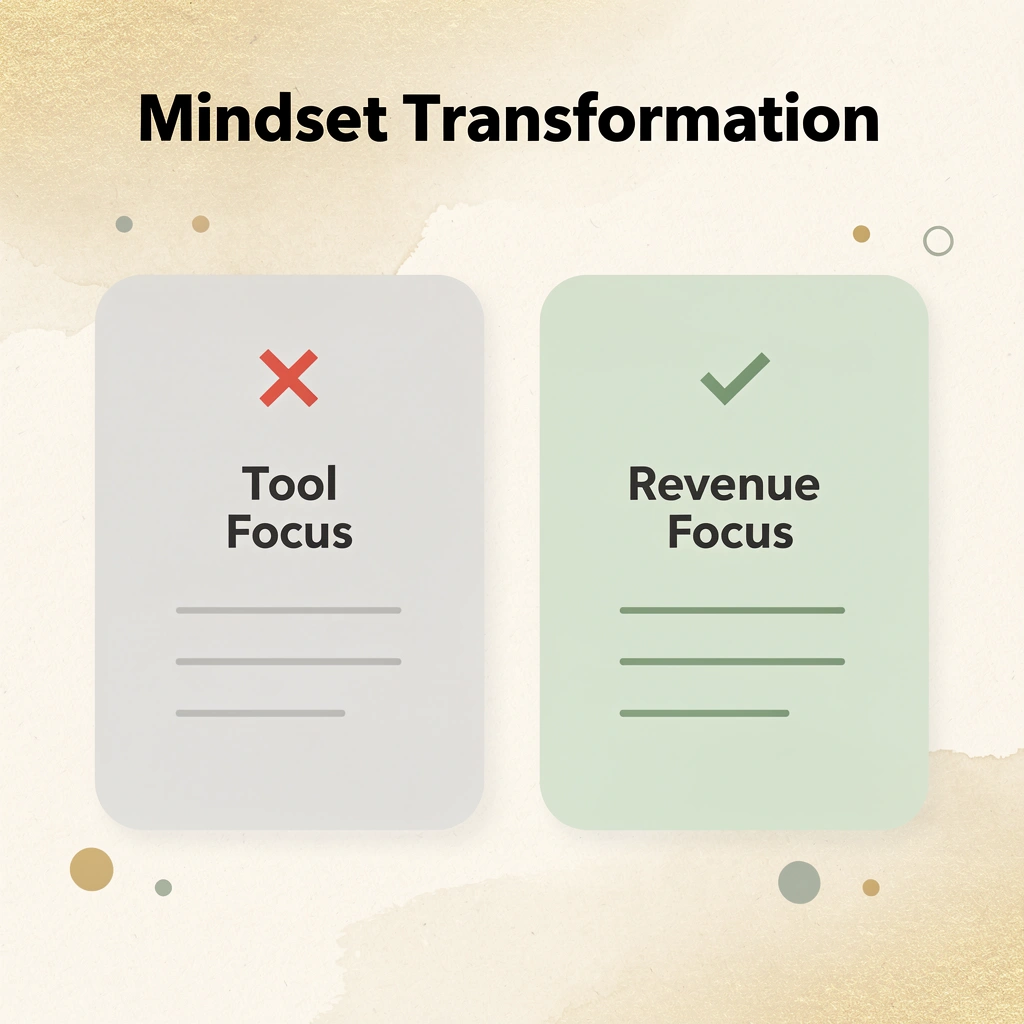
The transformation starts when you stop asking "what can this tool do?" and start asking "what revenue outcome am I trying to create?" Most teams treat their marketing stack as a set of isolated capabilities—email sends, lead scores, form captures, visitor tracking. But connected workflows that move prospects toward purchase generate revenue, not individual capabilities. The difference is architectural, not tactical.
Key Point: Revenue-focused architecture connects your tools into workflows that drive prospects through your entire buyer's journey, not isolated touchpoints.
"Connected workflows that move prospects toward purchase generate revenue, not individual capabilities. The difference is architectural, not tactical."
Pro Tip: Map your ideal customer journey backward from purchase, then identify which tools must work together at each stage to move prospects forward.
Audit what you have against what you need
Walk through your last five closed deals. Write down every touchpoint between first contact and signature, then map those touchpoints to your current tools. Where are the gaps? Where did someone manually copy data between systems? Where did a prospect go silent because no one knew they'd engaged? According to insiderone.com, marketing automation can increase qualified leads by 451% only when the system captures and acts on buying signals throughout the entire journey. Your audit reveals whether your stack is structured to do that or merely logs disconnected activities.
Unify the data layer first
Revenue attribution breaks down when your email platform marks a lead as cold, your CRM shows three sales calls, and your ad platform claims credit for the conversion. The fix requires a single source of truth for contact records, unified event tracking across platforms, and shared definitions for lifecycle stages and conversion events. When marketing aligns with sales on the customer journey, the budget shifts from channels that drive clicks to those that generate pipeline, and campaigns are built around buying intent rather than engagement metrics.
Automate the handoffs, not just the tasks
Most automation focuses on individual actions: send an email when someone downloads a guide, update a field when a form gets submitted. But revenue happens in sequences. When a prospect visits your pricing page, opens three nurture emails, and requests a demo within 48 hours, that pattern should trigger an immediate sales alert with full context, not three separate notifications across different systems. Bud's AI agent handles these multi-step, cross-platform sequences by operating autonomously across your entire stack, executing complex workflows that once required manual coordination between marketing ops, sales ops, and RevOps teams.
What metrics actually drive revenue growth
Activity metrics tell you what happened. Revenue metrics tell you what mattered. Track how many leads entered your system this month, and also how many came from sources that have historically converted above 15%. Measure email open rates, but prioritize reply rates from accounts matching your ideal customer profile.
Why does alignment between teams matter for results
Research from RevOps Co-op Blog shows that companies with aligned sales and marketing teams see 36% higher customer retention rates. When both teams optimize for pipeline velocity instead of departmental vanity metrics, the entire system works toward the same outcome.
The hardest part isn't putting this into place. It's realizing how much manual work still happens in systems that claim to be automated.
The Same Problem in Marketing Automation Is Manual Work Across Disconnected Systems
The friction in B2B marketing automation isn't the platforms themselves. It's the hours spent logging into six different systems to copy a campaign ID, paste it into a spreadsheet, export a CSV, reformat columns, upload it elsewhere, then manually trigger the next step. Someone must oversee the handoffs between tools.

Key Point: Manual handoffs between marketing tools create hidden operational debt that compounds over time.
Most teams handle this through shared logins, Slack reminders, and Google Docs procedures explaining which fields to map and which buttons to click. The process breaks when a campaign manager goes on vacation, a platform updates its interface, or a new tool gets added to the stack. Deadlines slip, and someone spends an afternoon rebuilding a workflow that should have run automatically.
As campaign complexity grows, these manual bridges between systems become the bottleneck. A lead moves from an anonymous visitor to an MQL, but that transition requires someone to check one platform, confirm the threshold in another, then manually push the record forward. The work is clerical, not strategic, and compounds with every new integration.
| Manual Process | Time Required | Failure Points |
|---|---|---|
| Cross-platform data sync | 15-30 minutes | Login timeouts, format errors |
| Campaign status updates | 10-20 minutes | Missing fields, wrong mappings |
| Lead handoff verification | 5-15 minutes | Threshold changes, system delays |
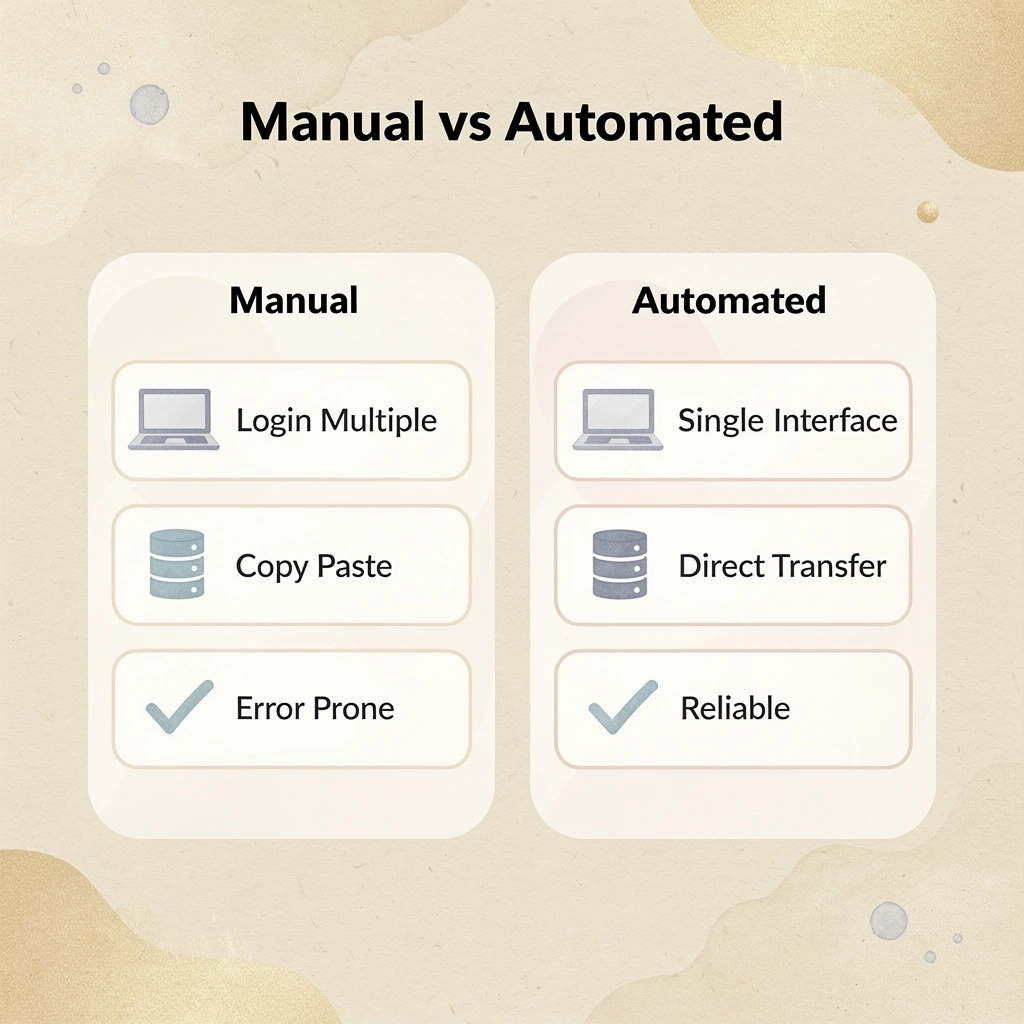
Warning: Each manual handoff introduces a potential failure point that can break your entire automation sequence.
Bud operates differently because it moves across your existing systems with its own browser and infrastructure, executing multi-step workflows that normally require manual navigation between tabs, data extraction, and action triggering. You delegate the task through text or Telegram, and Bud handles execution end-to-end.

You can start a session with Bud in under five minutes to see how it navigates a real workflow across multiple platforms. The goal is to remove the manual work between your tools, so your team can focus on strategy rather than data entry.